
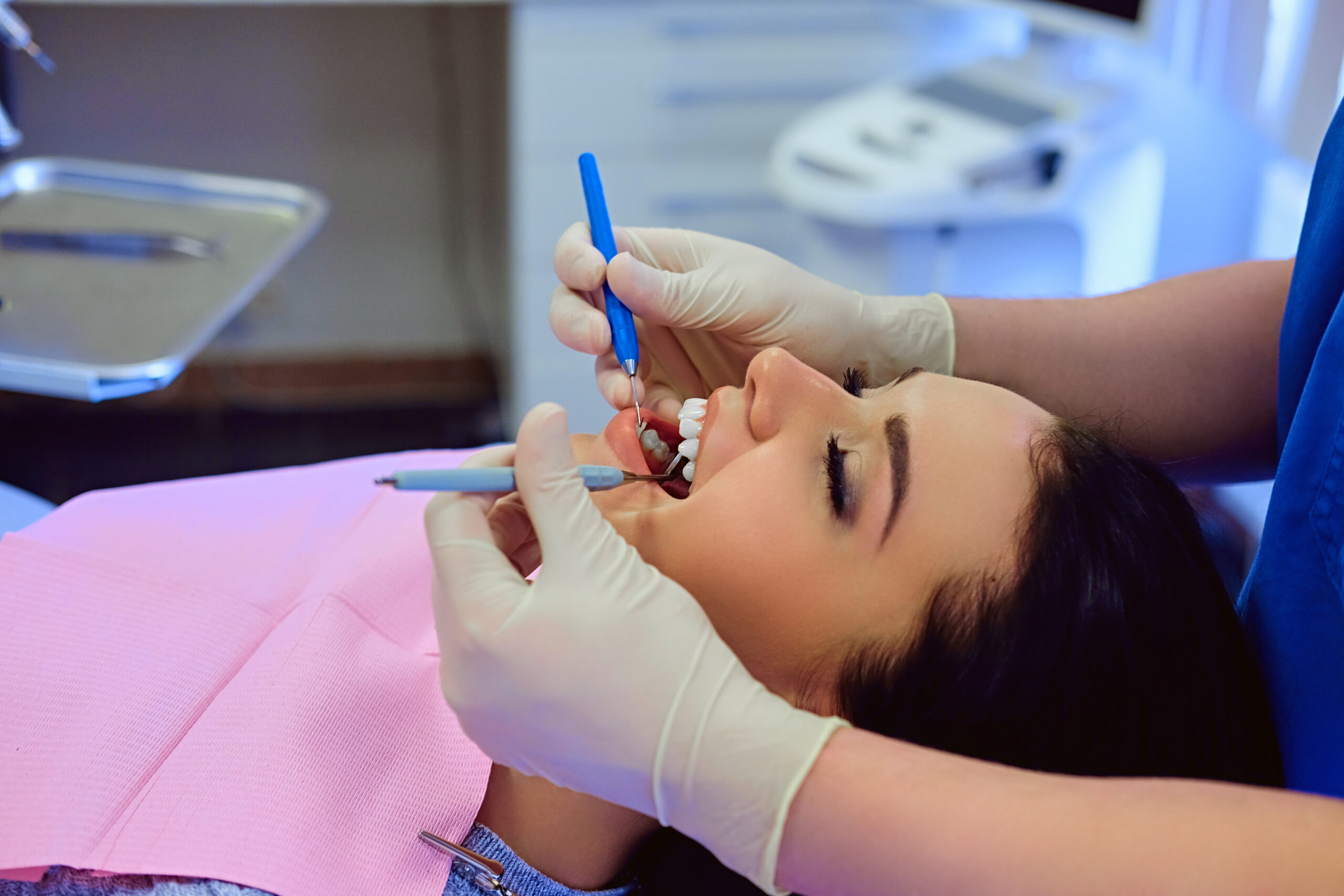
You go in for a routine check-up, and the crown dentist tells you that one of your teeth needs a crown. No explanation of alternatives. No mention of anything smaller or simpler. Just, you need a crown.
It’s a situation more patients experience than most dentists would like to admit. And while crowns are sometimes the right and only answer, there are plenty of cases where they’re recommended when a more conservative option would work just as well and protect more of your natural tooth in the process.
At Clove Dental Beverly Hills, we believe in doing what’s right for your tooth, not what’s fastest or most familiar. That starts with asking the questions patients often don’t know to ask.
What a Crown Involves (And Why It’s a Bigger Step Than It Sounds)
A dental crown is a full cap that fits over the entire visible portion of a tooth. To place one, your dentist must file down the tooth on all sides, typically removing between 60% and 75% of its natural structure. That’s not a minor adjustment. That’s a permanent and irreversible reshaping of a tooth that took years to develop.
Once a tooth is prepped for a crown, there’s no going back. The natural enamel is gone, and the tooth will always need some form of coverage going forward. This is why the decision to place a crown shouldn’t be taken lightly, and why it’s worth understanding whether a smaller option could accomplish the same goal.
The Situations Where Crowns Are Recommended Too Early
Crowns are not always necessary just because a tooth has been treated before, has a visible crack, or looks worn. Some of the most common scenarios where crowns get recommended prematurely include-
- A tooth with a large existing filling that is still structurally sound.
- Minor to moderate cracks that haven’t reached the root.
- Early-stage decay that hasn’t compromised the overall tooth structure.
- Mild wear or chipping that affects aesthetics but not function.
- A root canal tooth that still has adequate walls of natural structure remaining.
In each of these cases, there may be alternatives worth exploring before committing to a full crown. The key is having a dentist who is willing to have that conversation.
Small Cracks, Minor Decay and Worn Edges: Where a Crown May Not Be Necessary
Not every crack is a crisis. Teeth develop minor surface cracks, called craze lines, naturally over time. These affect only the outer enamel, cause no structural weakness, and require nothing more than monitoring. Recommending a crown for a craze line is like replacing a roof because of a surface scuff.
Similarly, minor decay caught early can often be addressed with a simple filling or a bonded restoration. Worn edges on front teeth, when limited in scope, can frequently be repaired with composite bonding, a procedure that adds material rather than removing it. Visiting a crown dentist doesn’t automatically mean a crown is what you’ll need.
The Amount of Tooth That Gets Removed for a Crown (And Why That Matters Later)
Every time tooth structure is removed, the tooth becomes more vulnerable. A heavily prepped crown tooth is more susceptible to nerve sensitivity, future fracture, and eventual failure. And when a crowned tooth eventually needs further work, which many do, there’s simply less natural structure left to work with.
This creates a cycle: crown leads to root canal risk, root canal may lead to post and core buildup, and so on. Starting with the most conservative treatment possible isn’t just about saving money; it’s about preserving options for the future.
What Dentists Look At Before Deciding Between a Filling, Inlay or Crown
A thorough evaluation before any major restoration should consider several factors. An experienced crown dentist will assess-
- How much healthy tooth structure remains after decay removal?
- Whether the remaining walls of the tooth are thick enough to support a filling or inlay.
- The location of the tooth and the bite pressure it handles.
- Whether cracks extend into the root or stay within the crown portion.
- The patient’s bite habits, including clenching and grinding.
When these factors point toward preserved structure and manageable damage, smaller restorations deserve serious consideration. An inlay, a custom-fitted restoration that fills a cavity without covering the entire tooth, is one of the most underutilized options in modern dentistry.
When a Tooth Can Be Strengthened Without Full Coverage
Modern dental materials have made conservative treatment more effective than ever.
An onlay, for example, can cover one or more cusps of a molar, protecting the areas most at risk, while leaving the rest of the natural tooth intact. This approach gives the tooth real structural support without the permanent sacrifice that a crown requires. For many patients, this is the right balance.
When a Crown Is the Better Choice
To be clear: crowns are genuinely necessary in many situations. A tooth that has lost most of its structure to decay, a molar that has cracked through to the gumline, or a tooth following a root canal on a back molar with thin remaining walls- these are cases where a crown provides protection that nothing else can match.
The goal isn’t to avoid crowns at all costs. The goal is to make sure the decision is made thoughtfully, with a clear explanation of why less invasive alternatives won’t hold up. Any skilled crown dentist should be able to walk you through that reasoning.
The Mistake of Choosing the “Bigger Fix” Too Early
There’s a tendency in dentistry, and in medicine generally, to lean toward the more comprehensive solution. It feels safer. More complete. But when it comes to teeth, bigger isn’t always better. The natural tooth you preserve today is the foundation for every treatment that might come later.
A patient who receives an inlay at 35 has more options at 55 than one who received a crown for the same problem. That’s not a small difference. Over the course of a lifetime, conservative early decisions compound into significantly better long-term outcomes.
Conclusion
The best treatment isn’t always the most extensive one. It’s the one that solves the problem while preserving as much of your natural tooth as possible. If a dentist recommends a crown, it is completely reasonable to ask what alternatives exist, what the risks of a more conservative approach are and why full coverage is necessary in your specific case.
At Clove Dental Beverly Hills, we take that question seriously. Every recommendation we make is based on what your tooth needs, not a standard protocol. We are here to give you real answers and treatment that holds up for years to come.