
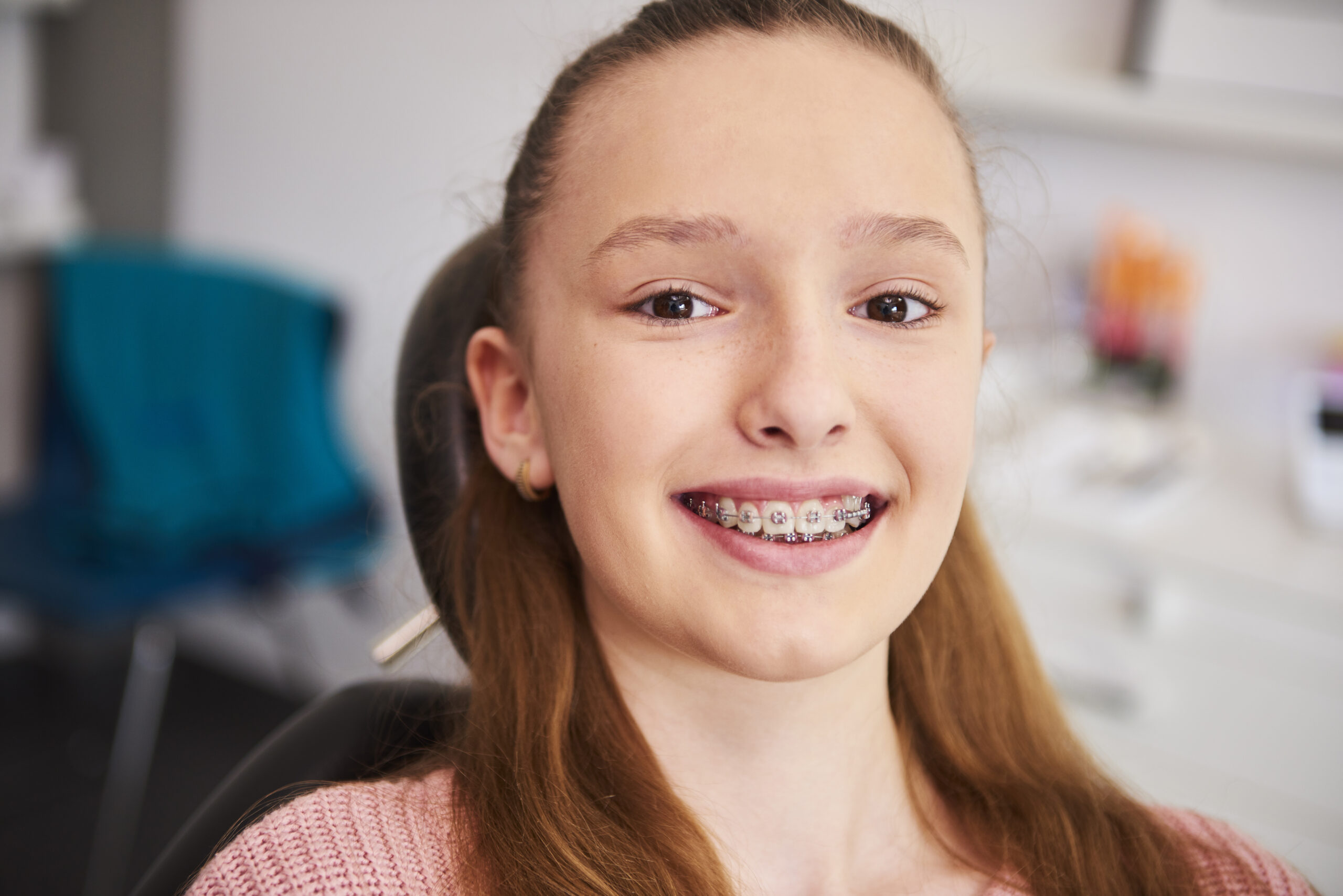
The traditional metal braces come off. The teeth are straight genuinely, visibly straight in a way they’ve never been before. The orthodontist is pleased. The patient is thrilled. A retainer is handed over with some brief instructions. And then, gradually, over months and years, something starts happening that nobody fully prepared them for.
The teeth begin moving back.
Not all the way. Not dramatically. But the front teeth that were perfectly aligned begin crowding slightly at the edges. The gap that was closed shows a thin line starting to reopen. The result isn’t the severity of what existed before treatment but it’s not the result the patient remembers from the day the traditional metal braces came off, either.
This is orthodontic relapse. Every orthodontist expects some degree of it. Most patients experience it to some degree. And it’s largely preventable but only if patients understand why it happens, which most don’t, because the explanation rarely survives the enthusiasm of the appointment when the brackets finally come off.
The Biology That Drives the Movement
Teeth are not fixed rigidly in bone. They’re suspended in the jawbone by a network of tissue called the periodontal ligament, thousands of microscopic fibers connecting each tooth root to the surrounding bone. These fibers act as a shock-absorbing, position-regulating system. They also have memories.
When teeth have occupied a particular position for years or decades, those fibers are under tension that reflects that position. When traditional metal braces move a tooth repositioning it over months of treatment the bone remodels along with the movement. New bone fills in behind the moving tooth. Old bone resorbs ahead of it. This process keeps up with the orthodontic movement reasonably well.
But the fibers in the gum tissue above the bone level the supracrestal fibers remodel much more slowly than the bone does. Research suggests these fibers can take a year or more to fully adapt to a new tooth position. During that entire window, they’re under tension from the old position and exerting force not large force, but constant and persistent. Force that, without something resisting it, moves the tooth back toward where it was for the past two decades.
This is not a failure of the orthodontic treatment. It’s biology operating exactly as designed. The treatment moved the teeth. The fibers remember where they were.
What a Retainer Is Actually Doing
Most patients understand a retainer as something that “holds” the teeth in position. That framing is correct but incomplete and the gap between “holds” and “actively resists constant biological force” matters enormously for how seriously patients treat the wearing schedule.
The night the traditional metal braces come off, the teeth are already under pressure from those fibers. The retainer placed that day is countering that pressure. Every hour the retainer is not in, the fibers are working. Some of that work is recoverable if the retainer goes back in. After enough time without it, the movement becomes permanent.
The first 12 months post-braces are the highest-risk period. Bone is still consolidating, fibers haven’t yet remodeled to the new position, and the teeth are maximally susceptible to movement. The clinical recommendation during this phase is full-time wear 20 to 22 hours per day mirroring the wearing requirement of clear aligners during active treatment, but now for retention rather than movement.
After that first year, nighttime-only wear is typically appropriate. But nighttime-only means every night. Indefinitely. The patient who wore their retainer consistently at 24 and stopped at 27 will have measurably different teeth by 35 not because anything dramatic happened, but because the fibers were left unsupervised for years.
Fixed vs. Removable The Trade-Off Nobody Explains Completely
There are two categories of retainer after traditional metal braces, and patients deserve a clear explanation of what each one does and doesn’t cover.
A bonded fixed retainer, a thin wire attached to the inside surfaces of the lower front teeth holds those specific teeth precisely in position without requiring any patient action. It works continuously, invisibly, and permanently. Its limitation is coverage: a fixed retainer only retains what it’s directly bonded to. If it’s only on the lower anteriors, everything else in both arches still depends on a removable retainer to stay in position.
A removable retainer either a clear thermoplastic tray or a Hawley wire-and-acrylic appliance, covers the full arch and maintains the position of all the teeth within it. Its limitation is patient compliance. When it’s in a case on the nightstand, it is doing absolutely nothing.
Most orthodontists recommend a combination: fixed retention for the highest-risk teeth (lower front teeth move most predictably without it), removable for comprehensive arch coverage. Whether both were clearly explained and whether both are being used appropriately are often different answers.
What Can Be Done When Relapse Has Already Happened
If teeth have moved after traditional metal braces recently or years ago the options depend on how much drift has occurred.
Minor movement caught within one to two years can often be recovered with consistent retainer wear, sometimes with a new retainer made to the corrected position. Moderate relapse that’s been progressing for longer typically requires a short retreatment phase with either limited traditional metal braces or aligner refinement followed by more disciplined retention afterward.
At Clove Dental Beverly Hills, we see patients at every stage of this. The conversation we prefer to have is the one before relapse starts explaining the biology clearly enough that the retainer becomes something the patient understands and protects, rather than something they gradually stop wearing because the teeth still look fine.
They look fine until they don’t. And the window to address it easily is always narrower than patients expect.