
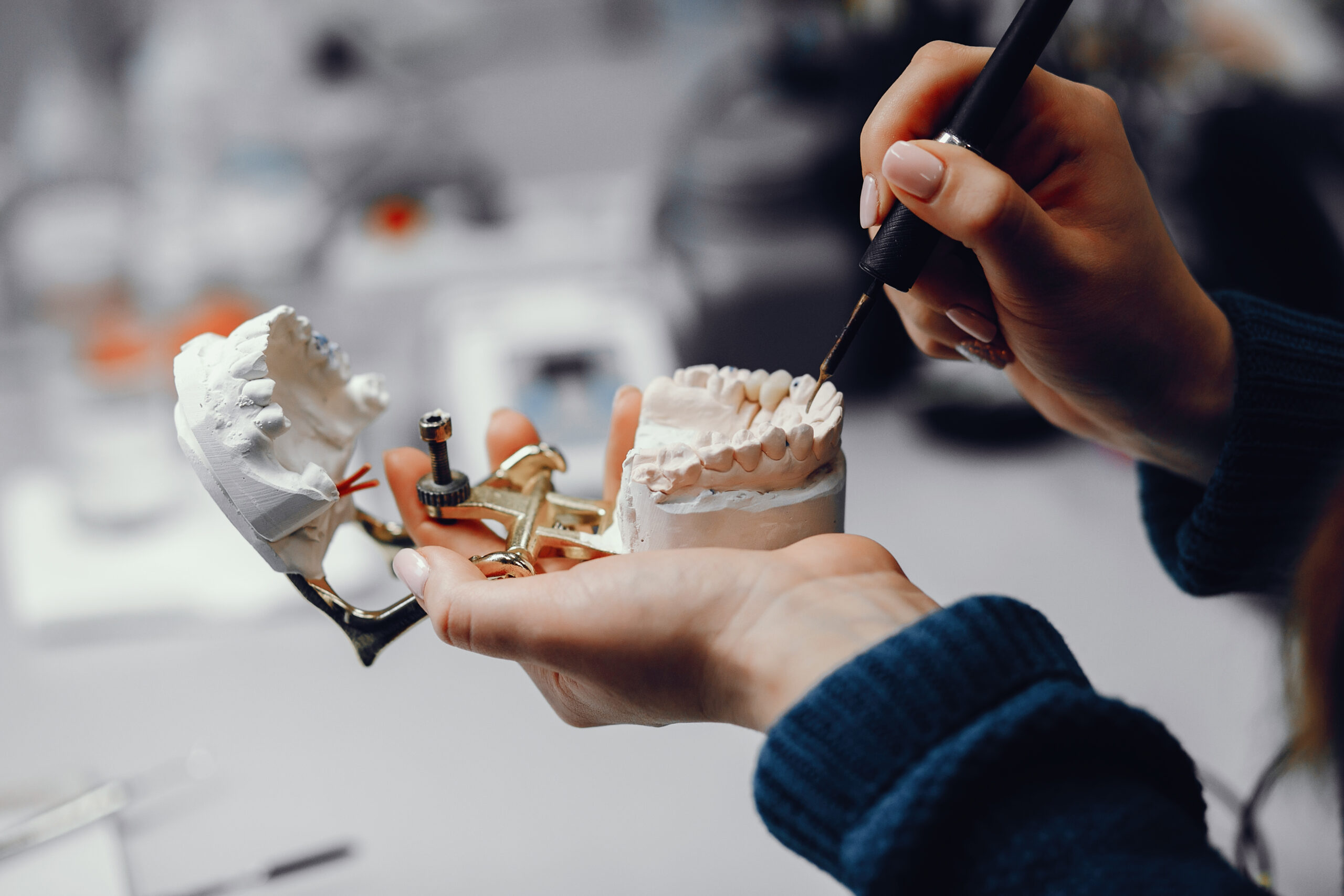
There’s a specific kind of frustration that partial denture wearers learn to live with quietly. Not sharp pain. Not an obvious failure. Just a persistent, low-grade instability, a slight lift when biting into something firm, a subtle shift during chewing, a feeling that the appliance is always one bite away from embarrassing you in public.
They’ve mentioned it. The dentist adjusted the clasps, made a small modification, and said it takes time to adjust. The rocking continued. Eventually they stopped bringing it up and started working around softer foods, chewing on the other side, a quiet vigilance at every meal.
At Clove Dental Beverly Hills, this is one of the most common stories we hear from patients with partial dentures in Beverly Hills. And the frustrating truth is that movement during eating is not something patients should be adapting to. It’s a clinical sign that something in the fit or design is wrong and living with it has consequences that go beyond the inconvenience.
Why a Partial Denture Moves The Real Reasons
A well-made, well-fitting partial denture should be stable during normal function. Some micro-movement during extreme biting forces is expected, but routine chewing and conversation should not dislodge or rock the appliance. When movement is consistent and repeatable, one of several things has gone wrong.
- Bone resorption beneath the denture base- The ridge of tissue and bone that the acrylic base rests on is not static. Wherever a tooth root is no longer present, the bone beneath that site slowly resorbs and shrinks over months and years. Partial dentures in Beverly Hills that fit precisely at delivery may fit poorly two or three years later simply because the underlying ridge has changed shape. The denture was made for an anatomy that no longer exists.
- Clasp fatigue- The metal clasps that wrap around natural teeth to hold the partial in position are precision components. They flex slightly during insertion and removal and flex is what creates retention. Over months and years of daily use, that flex fatigues. The metal gradually loses its spring. Clasps that once gripped firmly begin to grip loosely. And a partial denture with fatigued clasps rocks and lifts during function.
- Changes in the abutment teeth- If the natural teeth the clasps grip have shifted position, been restored with a crown, developed decay, or changed in any way since the partial was made the clasp fit changes with them. A clasp designed for a specific tooth geometry doesn’t grip a different geometry the same way. Even minor changes in the shape of an abutment tooth can meaningfully affect how well partial dentures in Beverly Hills retain.
- An impression that never captured the ridge accurately- In some cases, movement was present from the beginning because the impression that the partial was fabricated from didn’t accurately capture the ridge anatomy or tooth positions in the first place. This is less common in careful practices, but it’s not rare when precision is compromised.
Why the Movement Matters Beyond the Discomfort
Most patients frame a rocking partial as a quality-of-life problem. It’s annoying, it limits what they can eat, it creates social anxiety. Those are real problems. But the clinical consequences go further.
A partial denture that rocks during chewing places lateral stress on its abutment teeth, the natural teeth the clasps attach to with every chewing cycle. That stress, repeated thousands of times across months and years, is not benign. It contributes to bone loss around the abutment tooth roots and can increase their mobility over time.
Additionally, movement creates a pumping action beneath the denture base that accelerates bone resorption in the ridge. The partial that rocks because of bone loss is also, through that rocking, causing more bone loss. It’s a cycle, and it moves in one direction.
At Clove Dental Beverly Hills, we evaluate partial dentures in Beverly Hills at every visit not just for whether they’re present, but for retention, stability under load, and the health of the abutment teeth. Movement is a clinical flag, not a footnote.
Rebase vs. Remake What the Options Actually Mean
When partial dentures in Beverly Hills are no longer fitting well, two main correction pathways exist.
A rebase replaces the acrylic base of the existing partial with new material fabricated to the current ridge shape while keeping the original teeth and metal framework intact. It’s a more conservative, less expensive intervention that works well when the framework itself is sound and the clasp design is still appropriate.
A remake means starting from scratch with a new framework, new teeth, new base, new impressions. This is necessary when the existing framework is distorted, when the clasps are fatigued beyond adjustment, or when the original design is no longer clinically adequate.
The right choice depends entirely on what’s actually causing the movement. At Clove Dental Beverly Hills, the evaluation includes examining the framework integrity, testing clasp retention directly, assessing ridge changes on clinical examination and X-ray, and checking the abutment teeth for any changes since the original partial was made. That evaluation determines the path, not a default assumption.
The Question Worth Asking
If your partial dentures in Beverly Hills move when you eat, don’t keep adapting around it. Ask specifically: “Is this movement coming from clasp fatigue, ridge resorption, or something else and what does that mean for what actually needs to be done?”
That question gets you a real answer. A rocking partial isn’t a character of the appliance you have to accept. It’s a sign that something needs to be looked at and the sooner it is, the better the outcome for both the partial and the teeth supporting it.