
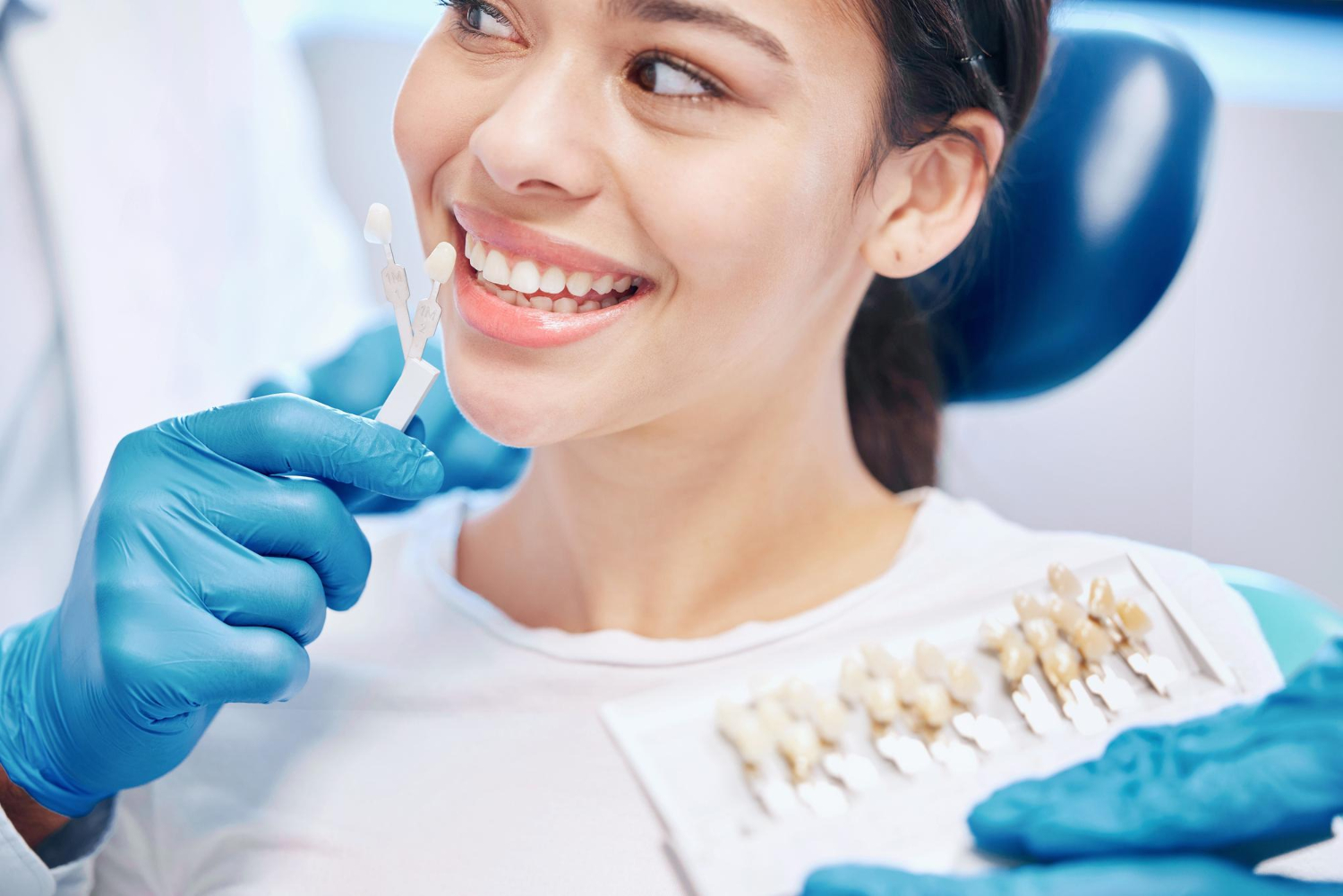
Picking a color off a chart sounds simple enough, until you realize teeth aren’t one flat shade at all. Look closely at a natural tooth and you’ll notice it’s darker near the gumline, lighter toward the middle, and slightly translucent right at the biting edge where light passes through instead of bouncing off.
Porcelain veneers in Beverly Hills that ignore this layered reality end up looking like a solid, flat slab instead of something that belongs in your mouth, which is exactly why the shade and shape conversation happens long before any porcelain gets fabricated.
We want to walk through what goes into this planning stage, because it shapes the final result far more than most patients realize walking in.
Teeth Aren’t One Color, They’re a Gradient
This is the detail that separates a natural-looking veneer from one that reads as obviously fake from across a room. A single tooth typically shows three distinct zones, a slightly deeper shade near the gum, a lighter body in the middle, and a translucent edge that lets light pass through rather than reflecting it flatly back.
Matching porcelain veneers in Beverly Hills to this layered structure requires a ceramist who’s thinking about light behavior, not just picking a number off a standardized shade guide and calling it finished.
Why Your Skin Tone Enters the Conversation
Something rarely discussed clearly in blogs about veneers: the shade that looks brightest against your skin tone isn’t always the shade that photographs or reads as natural in daily lighting.
Warmer skin undertones often pair better with slightly warmer tooth shades, while cooler undertones can carry a brighter, whiter shade without looking artificial. Skipping this consideration is one of the more common reasons someone ends up with veneers that look great in the dental chair under bright overhead lighting but feel oddly mismatched once they’re back in normal daylight.
Shape Isn’t Just About Straight and Even
Shape decisions go far beyond simply making teeth uniform. Rounded corners on incisors tend to soften an overall smile and read as more approachable, while slightly squared corners project a bolder, more defined look.
Central incisors, the two front teeth, typically get made marginally longer than the teeth beside them. Since this subtle length difference is what human eyes read as natural rather than artificially uniform. Flattening every tooth to the exact same length and shape is one of the fastest ways porcelain veneers in Beverly Hills can end up looking obviously done rather than genuinely improved.
The Mock-Up Step That Prevents Regret
Before any permanent porcelain gets made, a temporary mock-up, sometimes called a trial smile, lets patients see an approximation of the final shape directly in their own mouth. This step catches mismatches early, maybe the length feels too aggressive, maybe the shape reads more square than expected in person.
Adjustments at this stage take minutes. Adjustments after the final porcelain is bonded permanently in place involve remaking the veneer entirely, which is exactly why skipping this preview step rarely pays off in the long run.
Lighting Changes Everything, Literally
A detail almost nobody mentions upfront: shade selection ideally happens under a mix of lighting conditions, not just the bright overhead dental light most offices default to. Natural daylight, indoor incandescent lighting, and even camera flash all render the same shade slightly differently.
A shade that looks perfect under one lighting type can look noticeably different walking outside minutes later. Some patients specifically ask to step near a window during shade selection for porcelain veneers in Beverly Hills, and that request genuinely improves the accuracy of the final match.
Photographs Do More Work Than People Expect
Before-and-after photography isn’t just for marketing purposes, it plays a real functional role during planning. Detailed photos taken from multiple angles, close up and from a natural conversational distance. That helps the ceramist understand how teeth look in motion and in context rather than just as isolated shapes on a model. This step is often skipped in faster, less detailed veneer processes, but it’s a meaningful part of what separates a rushed result from one that genuinely fits someone’s face.
Why This Planning Stage Takes Longer Than People Expect
Patients sometimes assume veneers move quickly once the decision is made, prep the teeth, send to the lab and it’s done. In reality, thoughtful shade and shape planning can add real time upfront, multiple consultations, a mock-up review, sometimes photography sessions under different lighting. That extra time isn’t wasted, it’s what prevents the far more frustrating scenario of receiving finished porcelain that needs to be remade because the planning stage got rushed.
Final Thought
At Clove Dental Beverly Hills, we treat shade and shape as decisions worth slowing down for, not a quick checkbox before moving to fabrication.
If you’re exploring porcelain veneers in Beverly Hills, asking your dentist how they approach shade layering and mock-up previews tells you a lot about how much thought is going into the planning stage before any porcelain ever touches your teeth.