
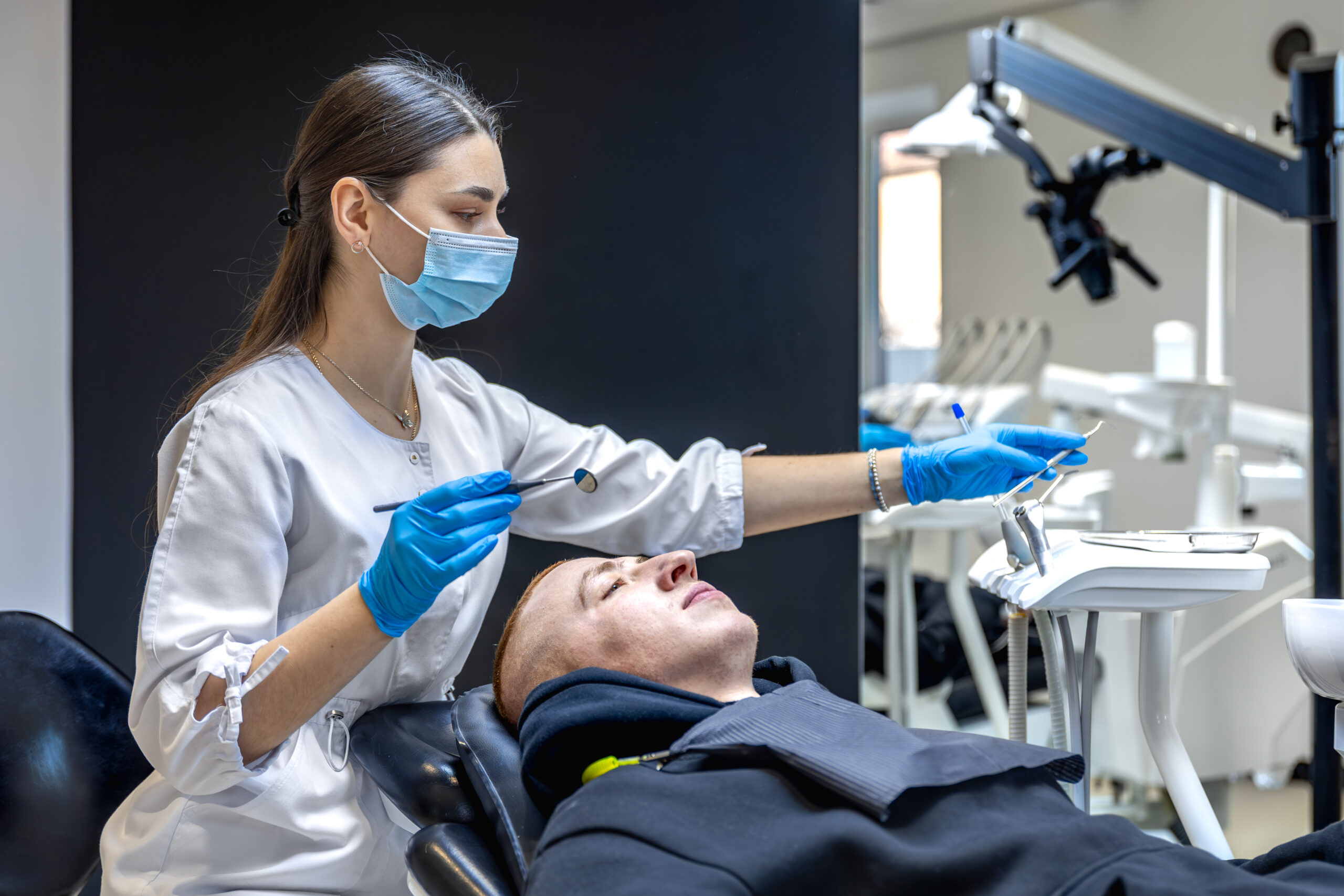
Getting handed a referral slip at the end of a dental visit can feel confusing, sometimes even a little worrying. Your dentist just spent twenty minutes looking at your tooth, and now they’re sending you somewhere else? It’s not a sign of bad news, and it’s definitely not a sign your dentist couldn’t handle it.
Most of the time, it means your case has crossed into territory where an endodontist in Beverly Hills has tools and training built specifically for what’s going on inside that tooth, not just around it.
We see this confusion often enough that it’s worth breaking down exactly what a referral means, why it happens, and what changes once you walk into that new office.
The Line Between General Dentistry and Endodontics
A general dentist handles the whole mouth, cleanings, fillings, crowns, gum health, the full picture. An endodontist narrows in on one specific structure, the pulp, which is the soft tissue sitting inside every tooth packed with nerves and blood vessels.
Once that pulp gets inflamed or infected, treating it well requires a level of precision that general dentistry doesn’t focus on daily. This is exactly why a referral to an endodontist in Beverly Hills happens, not because the problem is too big, but because it’s specialized in a way that benefits from someone who does this work constantly.
Signs That Push a Referral Forward
A few situations come up again and again in these referrals. A tooth that throbs with heat but calms down with cold, which usually points to nerve involvement deep inside. A tooth that’s been through more than one root canal attempt already and isn’t settling.
Unusual canal shapes that show up on an X-ray, curved or branching in ways that make treatment trickier than a standard case. Cracks that extend below the gumline, where visibility and precision matter far more than usual. Any one of these can nudge a general dentist toward calling in an endodontist in Beverly Hills rather than attempting the procedure themselves.
The Microscope Nobody Talks About
Here’s something rarely mentioned in blogs about this topic: most endodontic offices work under dental operating microscopes, magnifying the inside of a tooth anywhere from eight to twenty-five times its normal size.
A general dentist’s loupes, the magnifying glasses many wear during procedures, offer nowhere near that level of detail. Inside a root canal, some canals are thinner than a strand of hair and branch off unpredictably. Missing one of those branches during treatment is one of the leading reasons root canals fail later. That microscope is a big part of why complex cases get routed to a specialist instead of handled chairside.
What Actually Happens During the Visit
Walking into an endodontist’s office for the first time isn’t dramatically different from a regular dental visit, just more focused. Expect a detailed conversation about your symptoms, a close review of your X-rays, and sometimes a 3D scan if the canal structure looks complicated.
The procedure itself uses local anesthesia, the same as most dental work, and modern rotary instruments clean out the infected or inflamed pulp with far more consistency than older hand tools allowed. Most cases wrap up in one to two visits, depending on how complex the canal system turns out to be once they’re inside.
Why This Isn’t a Downgrade in Care
Some patients assume a referral means their general dentist is passing off a problem they’d rather not deal with. That’s not accurate.
Referring a complex case to an endodontist in Beverly Hills is closer to a cardiologist sending a patient to an electrophysiologist for a very specific heart rhythm issue. It’s about matching the problem to focused expertise, not offloading responsibility.
Your general dentist typically stays in the loop, reviewing the endodontist’s notes and picking back up with the crown or restoration once the root canal itself is finished.
The Part That Often Gets Skipped: What Happens After
Once the root canal is done, the tooth still needs protection, usually a crown, because a tooth that’s had its pulp removed becomes more brittle over time without that living tissue inside it. This is where your general dentist steps back in.
The endodontist handles the internal work, then hands things back for the restoration phase. It’s a two-part process working together rather than one dentist replacing another.
Conclusion
If you’ve just been referred to an endodontist in Beverly Hills, bring your X-rays or ask your general dentist’s office to send them ahead of your appointment. It saves time and avoids retaking images unnecessarily. Ask questions directly about canal complexity if you’re curious, most specialists are glad to explain what they’re seeing on the scan rather than just moving through the procedure silently.
At Clove Dental Beverly Hills, we treat these referrals as a normal, routine part of good dental care, not a red flag. Matching your tooth to the right level of expertise is what actually protects it long term, and that’s worth far more than trying to handle everything under one roof out of convenience.