
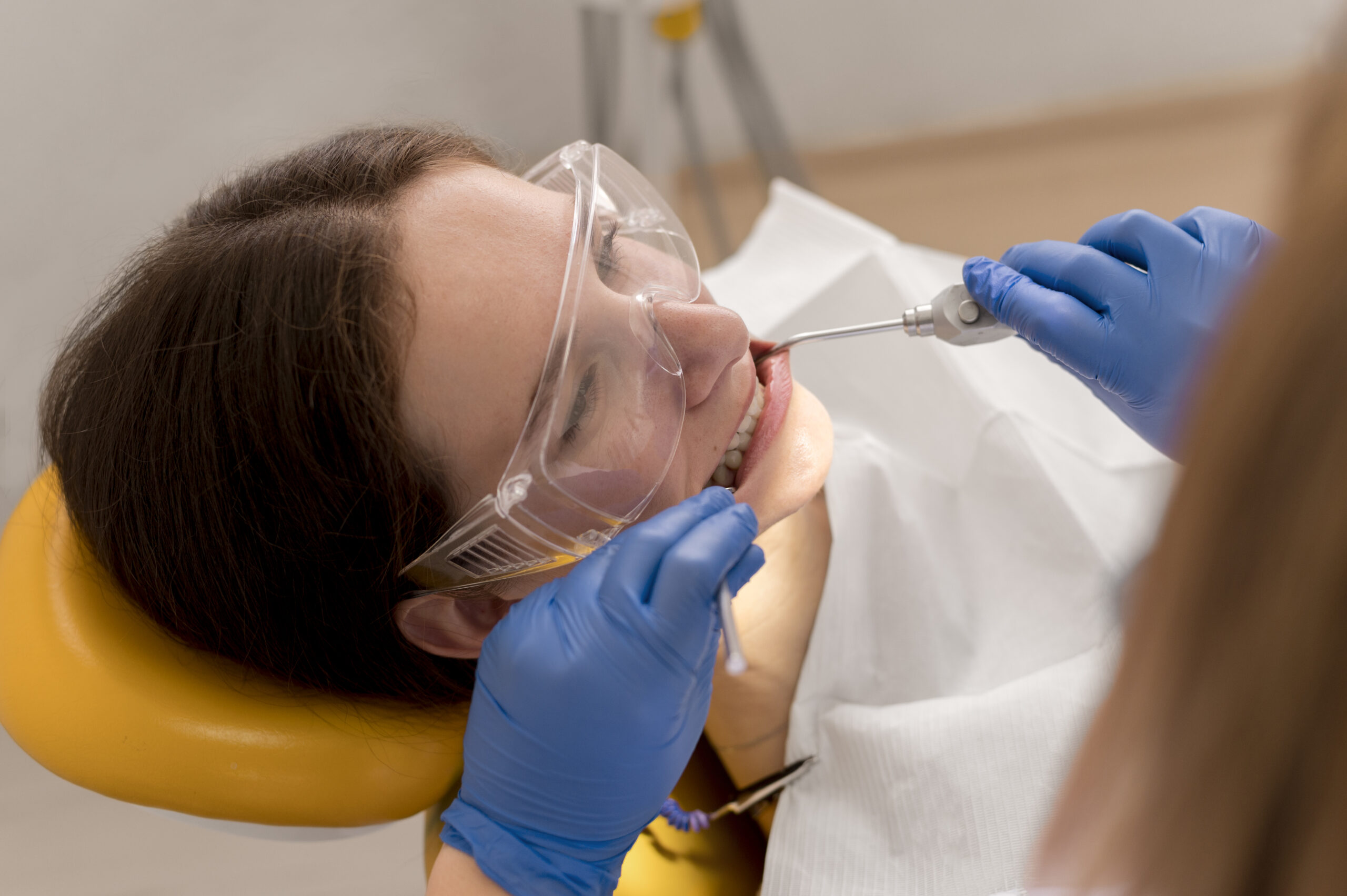
There’s a patient profile that shows up consistently at Clove Dental Beverly Hills. They’re in their mid-40s or 50s. They’ve been coming to the dentist their whole adult life. They brush regularly, they floss reasonably well, and they haven’t had a cavity in over a decade. Then suddenly over 18 months, maybe two years three new cavities appear. Then two more. In locations they’ve never had decay before. On root surfaces. On smooth surfaces between teeth. Places that make no sense given everything they’re doing right.
Nothing changed, they say. Same diet. Same hygiene routine. Same dentist.
Except one thing usually did change. Their medication list. And that single, invisible variable is doing more damage to their teeth than any dietary habit they’ve developed in years. The fix when caught in time is a fluoride treatment Beverly Hills dentists are increasingly recommending not for children, but for this specific adult patient.
What Saliva Actually Does and What Happens Without It
Most people think of saliva as the fluid that helps them swallow. That’s the least important thing it does.
Saliva is the mouth’s primary defense system against decay. It contains antimicrobial proteins that suppress bacterial growth. It buffers the acids that cavity-causing bacteria produce after every meal. It delivers calcium and phosphate ions that remineralize enamel in real time, essentially running a constant low-level repair process against the acid damage that happens throughout the day.
A healthy adult produces between 0.5 and 1.5 liters of saliva per day. That volume keeps the oral environment balanced slightly acidic after eating, neutral between meals, consistently remineralizing through the hours in between.
When salivary flow drops significantly, that entire system weakens simultaneously. Bacteria populations increase. Acid isn’t buffered. Remineralization slows. The enamel that held up fine for 40 years starts breaking down rapidly, and in patterns the patient has never experienced before.
The Medication List Nobody Connects to the Mouth
Xerostomia, the clinical term for reduced salivary flow, has a pharmaceutical cause list that reads like a cross-section of the most commonly prescribed medications in middle age.
SSRIs and SNRIs (antidepressants) are among the most significant offenders. Antihistamines both prescription and over-the-counter. Blood pressure medications, particularly diuretics and ACE inhibitors. Anticholinergic drugs used for bladder control, motion sickness, and allergies. Opioid pain medications. Antipsychotics. Many of these are taken daily on a long-term basis.
A patient on two or three of these simultaneously may have salivary flow reduced by 40% or more from their baseline. For someone whose teeth have depended on robust salivary protection their entire life, that reduction happens invisibly no symptom announces it and the mouth’s bacterial population responds within months.
The decay that appears at the next dental visit isn’t a failure of hygiene. It’s the predictable consequence of a changed oral environment that nobody connected to the medication list.
Why Fluoride Treatment Becomes the Response
The public understanding of fluoride treatment Beverly Hills patients have is mostly framed around children and cavity prevention. Adults who haven’t had a cavity in years often assume they’ve aged past the point where fluoride matters clinically. That assumption is wrong and specifically wrong for patients with medication-induced dry mouth.
Fluoride’s mechanism of action works at every age. Applied topically at professional concentrations, it does two things. First, it incorporates into the enamel crystal structure and converts hydroxyapatite, the natural mineral form of enamel, into fluorapatite, which is significantly more resistant to acid dissolution. Second, it has direct antimicrobial activity against Streptococcus mutans and Lactobacillus, the bacteria primarily responsible for driving decay.
When saliva flow is reduced and the oral environment becomes more acidic and more bacterially active, fluoride treatment Beverly Hills specialists recommend fills the protective gap that saliva can no longer fill on its own. It’s not a childhood intervention applied to an adult. It’s the correct clinical response to a specific change in the oral environment, a change that happens to be caused by a medication the patient will likely be on indefinitely.
Prescription Fluoride vs. Over-the-Counter
Standard fluoride toothpaste contains 1,000 to 1,500 ppm fluoride. That concentration is appropriate for a normal salivary environment. It is not adequate for a patient with significant medication-induced xerostomia.
Prescription fluoride toothpaste at 5,000 ppm delivers a substantially higher protective dose through daily home use. Combined with in-office fluoride treatment Beverly Hills appointments at three or four-month intervals rather than the standard six-month schedule it creates a meaningful defensive layer for a mouth whose saliva is no longer providing adequate protection.
At Clove Dental Beverly Hills, the fluoride treatment Beverly Hills patients receive is calibrated to their actual oral environment, not a default protocol. For patients with xerostomia, the concentration is higher, the frequency is greater, and the home regimen is more specific. The fluoride treatment Beverly Hills dentists recommend in this context is a proactive maintenance tool not a reactive response to decay that’s already happened.
The Conversation Worth Having Now
If you’re on long-term medication and your mouth has felt drier than usual particularly in the morning or during long periods without eating, mention it at your next appointment. Not as a minor complaint, but as a clinical data point.
And if new cavities have appeared after years without them and your habits haven’t changed, ask directly: “Could a medication I’m taking be reducing my salivary flow, and should my fluoride treatment Beverly Hills protocol be adjusted for that?”
The cavities that appear at 52 in someone who’s had perfect teeth their whole life almost always have an explanation. Finding it and addressing it with the right fluoride treatment is how you stop the pattern before it becomes a much larger restoration problem.