
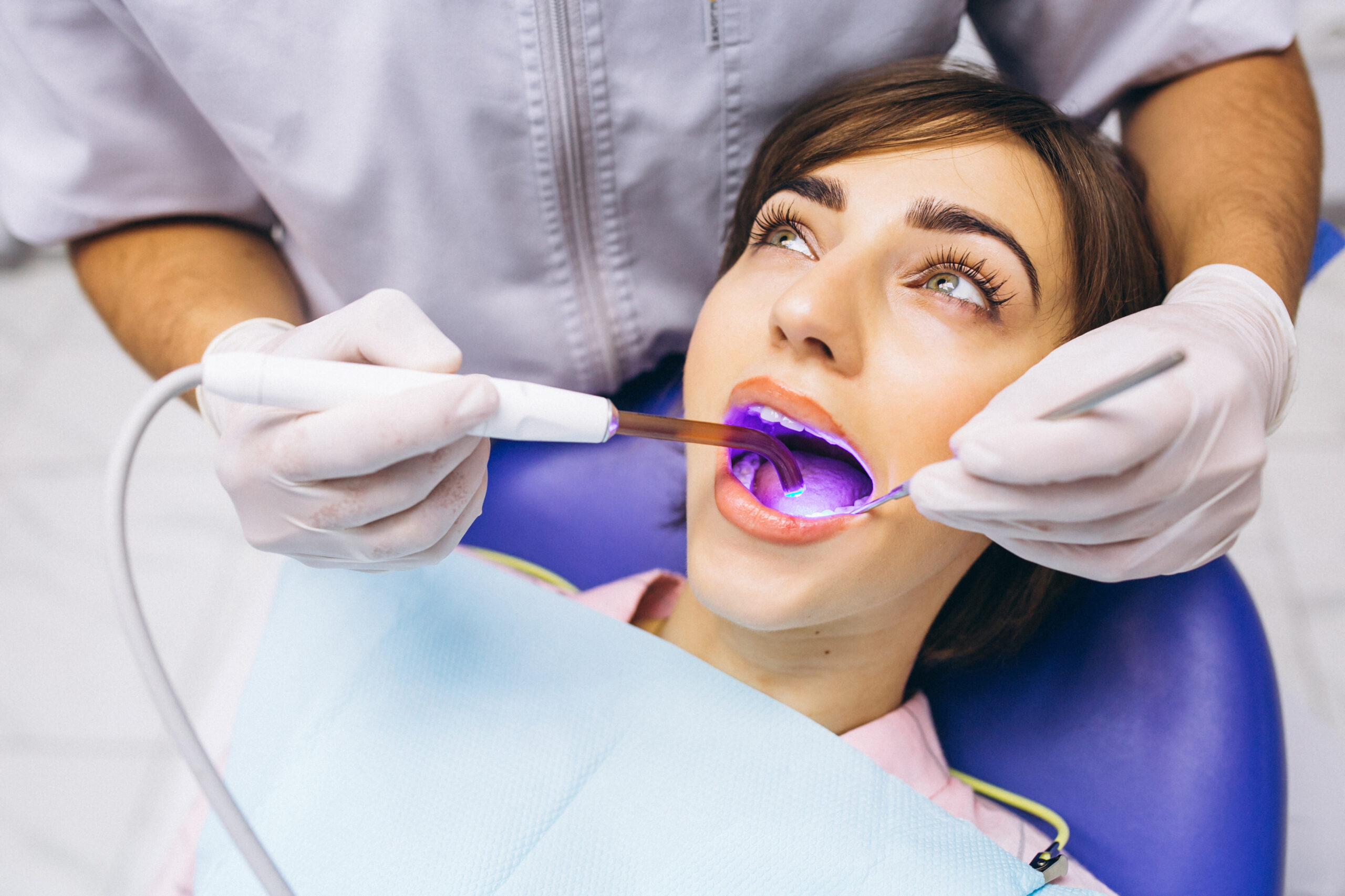
She sat in the chair for her routine cleaning, nothing unusual, nothing she hadn’t done a dozen times before. The hygienist worked through the appointment, she rinsed, she left.
By that evening, cold water made her wince. By the next morning, breathing through her mouth was uncomfortable. Four days later, she was still avoiding the left side when she drank anything cold. A week out, it had mostly faded enough that she filed it away as just one of those things that happens sometimes after a cleaning.
She mentioned it at her next appointment, almost as an aside. That aside opened a clinical conversation she hadn’t expected about her enamel thickness, her gum levels, and a pattern of dentin exposure that the sensitivity had just made impossible to ignore.
The sensitivity wasn’t a side effect. It was a signal. And the fact that it took a week to resolve told her dentist something specific and important about what was happening in her mouth.
If you’re searching for teeth cleaning in Beverly Hills and you’ve ever written off post-cleaning sensitivity as normal, this conversation matters for you too.
Why Post-Cleaning Sensitivity Happens at All
To understand what sensitivity after a cleaning reveals, it helps to understand the basic anatomy driving it.
Tooth sensitivity operates through a mechanism called the hydrodynamic theory. Dentin the layer of tooth tissue beneath enamel and beneath the cementum that covers root surfaces contains microscopic tubules that run from the tooth’s outer surface inward toward the pulp. When these tubules are open and exposed to the oral environment, changes in temperature, pressure, or chemistry cause fluid movement within them. That fluid movement stimulates nerve fibers at the pulp end of the tubule, producing the sharp, brief pain that characterizes dentinal sensitivity.
Healthy teeth, properly protected by intact enamel and adequate gum coverage, don’t have exposed dentin. The tubules are sealed. The hydrodynamic mechanism has no opportunity to activate.
When sensitivity occurs after a cleaning, particularly sensitivity that persists for days rather than resolving within hours, it means something was already present before the cleaning that made the teeth vulnerable. The cleaning didn’t cause sensitivity. It revealed it.
What the Sensitivity Is Actually Telling a Clinician
Post-cleaning sensitivity is not a uniform finding with a single explanation. The character, location, duration, and intensity of the sensitivity each contribute to a clinical picture that an attentive hygienist and dentist should be reading carefully.
Gum recession and root exposure. The root surface of a tooth has no enamel. It’s covered by cementum, a much thinner, less mineralized material that doesn’t provide the same protection as enamel.
Patients who experience teeth cleaning in Beverly Hills sensitivity distributed across multiple teeth rather than localized to specific spots are often showing a pattern consistent with generalized enamel thinning. This pattern, read correctly, opens a conversation about erosive factors in their diet or habits that are actively progressing.
Dentin hypersensitivity as a chronic condition. Some patients have dentin exposure that has been present long enough to become a chronic background condition sensitized to teeth that have adapted to a baseline level of stimulation.
Aggressive brushing patterns. Toothbrush abrasion the enamel and cementum loss caused by brushing with excessive force or a hard-bristled brush creates a specific pattern of sensitivity.
The Duration Signal: Why a Week Is Clinically Different From a Day
Mild post-cleaning sensitivity that resolves within a few hours represents temporary tubule opening following pellicle removal; the tubules remineralize quickly, sensitivity resolves, and the clinical picture doesn’t necessarily indicate significant pathology.
Sensitivity that persists for a full week tells a different story. It indicates a level of exposure significant enough that normal remineralization which happens continuously from minerals in saliva cannot close the gap quickly. The tubules are too numerous, too large, or too deeply exposed to reseal rapidly.
At Clove Dental Beverly Hills, post-cleaning sensitivity is a specific follow-up question not an afterthought, but a clinical inquiry that feeds directly into the diagnostic picture for that patient’s enamel and gum health. The answer to how long you were sensitive after your last cleaning is a data point that changes the clinical conversation.
What the Conversation With Your Hygienist Should Actually Look Like
Most post-cleaning sensitivity discussions, when they happen at all, follow a reassurance pattern: some sensitivity is normal after a cleaning, it should go away in a day or two, let us know if it persists. This response is not wrong, exactly. But it closes a diagnostic door that should stay open.
The conversation that actually serves the patient looks different. It starts by establishing the sensitivity pattern specifically where, how intense, what triggers it, and how long it lasts. That pattern maps onto the clinical findings from the cleaning itself: where recession was noted, which surfaces showed enamel changes, which areas required more careful instrumentation because of existing exposure.
This is what teeth cleaning in Beverly Hills level care should produce not just clean teeth, but a clinical picture of what those teeth are communicating.
When Sensitivity Points Toward Something That Needs Intervention
For most patients, the pathway from post-cleaning sensitivity to appropriate management is conservative improved remineralization support, behavior modification, closer monitoring. The sensitivity was the signal; the response is protective and preventive.
For some patients, the sensitivity points toward findings that require active intervention.
Recession that has progressed to the point where root surfaces are significantly exposed where the vulnerability to root caries is high and the sensitivity is substantially affecting quality of life is a candidate for soft tissue grafting.
Dentin exposure associated with abrasion notching at the gum line, when the notching is deep enough to approach the pulp or compromise structural integrity, may require bonded restoration to seal the exposed surface and rebuild lost tooth structure.
None of these interventions begin with sensitivity. They begin with the conversation the sensitivity makes possible.
The Week of Sensitivity That Changed Her Treatment Plan
The patient in the opening of this piece left her follow-up appointment with a prescription fluoride gel, a new understanding of her recession pattern, and a referral for a soft tissue grafting evaluation on three lower anterior teeth where the exposure had progressed beyond what remineralization alone could adequately manage.
None of that happened because something went wrong during her cleaning. It happened because one question about how long you were sensitive after your last cleaning was asked and answered honestly, and because the answer was treated as the diagnostic signal it actually was rather than the routine side effect it almost became.
The cleaning was excellent. The sensitivity was the real appointment.
For patients seeking teeth cleaning in Beverly Hills who have experienced post-cleaning sensitivity and written it off, the conversation you deserve starts with that experience, not past it. At Clove Dental Beverly Hills, that conversation is built into how we approach every hygiene appointment, because clean teeth and healthy teeth aren’t always the same thing, and the difference between them is often exactly what your mouth has already been trying to tell you.